
Referring to the continued production of gasoline, oil and gas, and fuel oil at this refining complex during wartime conditions, the CEO of Lavan Oil Refining Company said: "With the valuable efforts and dedication of the employees, even in the most difficult conditions, the resilience of the units was maintained and production continued at maximum possible capacity."
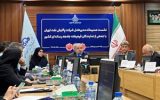
The purpose of launching this unit is to produce normal hexane with a purity of 52 or 85 percent, free of aromatics and sulfur, with a capacity of 2,000 barrels per day.

The CEO of the National Iranian Gas Company emphasized the need to prioritize the implementation of major projects, including the reconstruction of infrastructure damaged during the Third Imposed War, and said: "Careful management of resources, maintaining safety standards, and maximizing the capacity of human capital are among the most important indicators of timely implementation of projects."

The deputy chairman of the Energy Commission of the Islamic Council of Deputies emphasized: It is estimated that about one-third of the total refining capacity of the Persian Gulf is now offline; this lost capacity is not limited to crude oil alone, but forms the backbone of global markets for gasoline, diesel, and jet fuel.
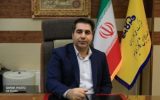
The CEO of Ilam Gas Refining Company announced the implementation of extensive programs to reduce flaring and protect the environment and said: With the measures taken, flaring in this complex has decreased by 50% and is moving towards complete elimination.
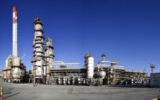
The project manager for the modernization of control systems at the Isfahan Refinery said: "As the first refinery in Iran, the Isfahan Refinery will ensure its sustainable production for years to come by using modern control systems instead of old pneumatic systems."
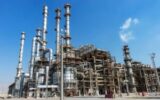
The overhaul operation of the South Pars Second Refinery was carried out without incident or downtime with the extensive participation of specialized personnel and local equipment; team cohesion and fleet readiness played a decisive role in improving productivity and developing activities.
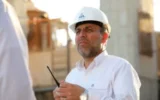
The deputy head of the National Refining and Distribution Company announced that daily production of gasoline and diesel has increased by a total of 9 million liters during the 14th government, an increase equivalent to the launch of a new refinery. He also announced the major reconstruction of the RFCC unit of the Arak refinery after 13 years; a move that prevented the unit from permanently shutting down at the peak of recent consumption and pressures.
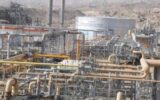
The Operations Manager of Fajr Jam Gas Refining Company announced continuous improvement programs and optimization plans in production processes, saying: "Despite the refinery being nearly 40 years old, implementing continuous measures, in addition to reducing energy consumption, increases the refinery's productivity."
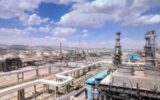
In the past year, the National Iranian Oil Refining and Distribution Company has implemented six important and strategic projects with an investment of approximately 840 million euros in expanding transmission infrastructure and refinery capacity. Another strategic project worth approximately 2 billion euros is currently being implemented and will be completed by the end of the year.