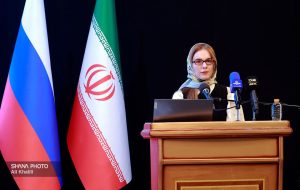
More than 2,000 items of goods exchanged between Iran and Russia; trade volume reached $4.7 billion
The Russian secretary of the Iran-Russia Joint Economic Commission announced the possibility of exchanging more than 2,000 items of goods and services between the two countries, saying: "According to the latest statistics, the volume of trade between the two countries has reached 4.7 billion dollars."
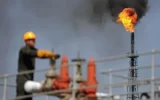
100,000 barrels increase in oil production in the oil-rich areas of the south; a big step towards the Seventh Plan
Within this framework, the southern oil-rich regions, by simultaneously focusing on maintaining production, developing fields, improving operational readiness, and increasing the resilience of facilities, were able to increase the average daily crude oil production by about 100,000 barrels in the operational scope of the Karun, Marun, Aghajari, Masjed Soliman, and Gachsaran oil and gas exploitation companies, while compensating for the natural decline in reservoirs; an increase that was the result of a series of field, technical, and managerial measures and highlights the decisive role of this company in the sustainable supply of energy to the country.
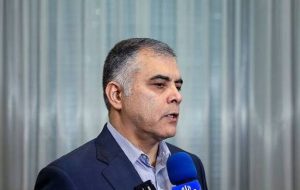
The 19th Joint Commission on Economic Cooperation between Iran and Russia is an important opportunity to deepen strategic relations between Tehran and Moscow
The Minister of Oil considered the 19th meeting of the Iran-Russia Joint Commission an important opportunity to deepen strategic relations between Tehran and Moscow and emphasized: Strengthening economic cooperation between Iran and Russia can play an effective role in enhancing the economic capabilities of the two countries and forming an order based on common interests.


آخرین اخبار

The plans of the minister of oil to solve the energy disputes have started
Providing free CNG fuel to pilgrims at Khosravi border

Shortage of gasoline and forgetfulness of “CNG”

Oil Minister: We will balance the production and consumption of gasoline with non-price solutions
Significant increase in gasoline production in Mahshahr export port
Successful representatives of the proposed Minister of Energy: Aliabadi has a plan to solve the problem of electricity imbalance
Iran’s backwardness in revitalizing oil and gas wells
The mystery of Iraq’s gas debt to Iran/ the uncertainty of 11 billion dollars of national wealth
Providing financial resources to solve the electricity imbalance from the National Development Fund