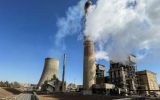
Forty million cubic meters of gas and 58 million liters of liquefied petroleum gas are delivered to power plants daily, and despite having 1.7 billion liters of fuel stored in tanks, the risk of winter power outages has decreased; however, the sustainability these conditions remains under assessment.

The deputy minister of oil said: With the registration of a historical record in liquid fuel delivery to power plants in December, the power plant fuel reserves reached an optimal condition, and this very fact led to no planned power outages in the country during the peak of the cold season.
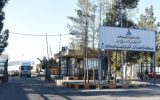
The manager of the National Petroleum Products Distribution Company in the Zahdan region announced the widespread distribution of white oil in the area, stating: So far, 230 million liters of white oil have been distributed in this region, and white oil has been allocated two batches of 300 liters cold season storage.
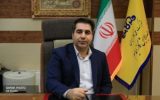
The CEO of Ilam Gas Refining Company announced the implementation of extensive programs to reduce flaring and protect the environment and said: With the measures taken, flaring in this complex has decreased by 50% and is moving towards complete elimination.

With the implementation of the new gasoline scheme, the use of station holders' cards has decreased by 17% and the use of personal cards has increased. Also, about 9 million liters of consumption decreased daily and the amount of consumption decreased from 129 million liters to 120 million liters.
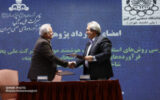
Three contracts and three research and technological agreements were signed between refining companies and research institutes and universities in the country with the aim of maximizing the use of domestic capacities in the refining industry.

The CEO of the National Iranian Petroleum Products Refining and Distribution Company, emphasizing the move towards data-driven management and smart fuel chain, said: "The opportunity for technological and data-driven work in the refining and distribution industry is very broad. What is important in this path is the right direction, prioritizing issues, and defining effective cooperation models."

The Deputy Minister of Oil for Refining and Distribution announced the acceleration of the implementation of quality improvement projects for the production of petroleum products in refineries within the framework of the tasks of the Seventh Development Plan and said: "With the commencement of the 14th government, the focus of resources and management has been purposefully placed on three national priority projects in the refineries of Shiraz, Tehran, and Isfahan."
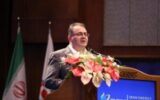
Arash Najafi criticized the lack of attention to consumption management and incorrect energy policies, saying that inaction in recent years has faced the country with inflation of nearly 1,000 percent, and without implementing optimization programs, any price reform will only increase economic pressure.
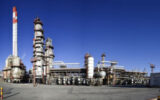
The project manager for the modernization of control systems at the Isfahan Refinery said: "As the first refinery in Iran, the Isfahan Refinery will ensure its sustainable production for years to come by using modern control systems instead of old pneumatic systems."