
Abadan Petrochemical Company: A 50-year legacy that went bankrupt
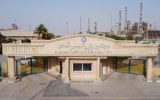
According to Energy Press, the roots of Abadan Petrochemical Company date back to 1963, when the Planning and Budget Organization, in cooperation with the French Petroleum Institute, initiated studies to establish a petrochemical industry. The result of these studies was the establishment of a company with 74% participation from Iran and 26% from the American company “B.F. Goodridge”. The construction of this complex began in 1967 and was put into operation in 1969 with an initial capacity of 20,000 tons of PVC. Although the eight-year war turned this unit into ruins, its reconstruction in the 1960s and 1970s brought Abadan Petrochemical back into the economic cycle.
Shareholding Structure and Financial Performance in the Mirror of the Stock Exchange
This complex, which has been present in the capital market with the symbol “Shapetro” since 1997, is currently managed by the Oil, Gas and Petrochemical Investment Company (TAPICO). TAPICO is considered the managing shareholder with 53% ownership, and the National Pension Fund is also present with 6% in the shareholder composition.
A review of financial figures shows that Abadan Petrochemical recorded a revenue of 38,834 billion Tomans in 1403. However, performance reports indicate an increase in accumulated losses; a situation that company managers attribute to the decline in the global price of PVC, increased overhead costs, and equipment wear and tear.
Technology obsolescence; Sheptro’s Achilles’ heel
One of the most critical weaknesses of Abadan Petrochemical is the defect in the production chain due to the severe obsolescence of the chlor-alkali unit. This defect has prevented the company from using its full nominal capacity of 150,000 tons. Currently, actual production is significantly behind development goals (110,000 tons of PVC per year). Obsolescence has not only reduced productivity, but has also increased maintenance and repair costs exponentially.
Feedstock bottleneck and crisis overcoming projects
The main problem of Abadan Petrochemical is the instability in the supply of feedstock received from the Abadan refinery. To solve this bottleneck, the opening of the gas pressure boosting station last year and the start of the liquid chlorine injection unit in May 2024 are measures to reduce the cost and complete part of the EDC chain.
Change of ownership; a roadmap to break the deadlock
Experts believe that a fundamental solution to the feedstock problem and the modernization of the chlor-alkali unit are beyond the current financial capacity of its shareholders. In this regard, the most serious scenario proposed is the transfer of Abadan Petrochemical to a subsidiary of the Persian Gulf Holding (PGPICC). This structural shift can, relying on the logistical capacity and extensive feedstock portfolio of the Persian Gulf Holding, remove this old unit from the circle of loss-making companies and stabilize its 14 percent share in the country’s PVC market.
Today, Abadan Petrochemical Company, more than needing praise for the past, needs tough management decisions in the areas of modernization and changing the ownership structure in order to preserve its 50-year legacy in today’s competitive market.
Tags:Abadan Petrochemical
- Comments sent by you will be published after approval by site administrators.
- Comments that contain slander will not be published.
- Comments that are not in Persian or not related to the news will not be published.
Comments
Total comments : 0 Awaiting review : 0 Date: 0