
Accelerating refining and distribution in fuel portfolio diversification; restoring CNG capacity and reducing gasoline consumption
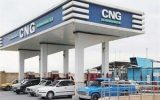
According to Energy Press, citing the National Iranian Petroleum Refining and Distribution Company’s website, diversifying the fuel portfolio was one of the goals that was on the agenda since the 14th government came to power, and various measures have been taken to achieve it over the past year. The fact that gasoline consumption exceeds production and the neglect of the capacity of fuels such as CNG and LPG has doubled the need to move towards diversifying the country’s fuel portfolio.
Unveiling plans and projects to diversify the fuel portfolio
In this regard, in February last year, plans and projects to diversify the country’s fuel portfolio were unveiled in the presence of Mohammad Sadeq Azimifar, CEO of the National Iranian Petroleum Refining and Distribution Company, Keramat Vaiskarami, CEO of the National Iranian Petroleum Distribution Company, Deputy Minister of Industry, Mines and Trade, and a group of managers of the automotive industry and the private sector.
In this ceremony, in addition to the operation of 12 CNG fuel stations in the provinces of East Azerbaijan, Kerman, Isfahan, Lorestan, Khorasan Razavi, and Sistan and Baluchestan, memorandums of understanding were signed on the use of bioethanol in the fuel supply industry in cooperation with IDRO, the production of dual-fuel vehicles with Iran Khodro and Zamyad companies, and the resumption of the system for converting gasoline vehicles to dual-fuel vehicles.
Two paths for developing dual-fuel vehicles
After the unveiling of the aforementioned plan, the development of dual-fuel vehicles will be pursued through two paths: factory production and workshop conversion. In a situation where the country’s full CNG capacity is still not used, one of the government’s steps has been to develop infrastructure that will allow for maximum utilization of this fuel.
According to statistics, despite the passage of about 24 years since the beginning of CNG development and the creation of appropriate infrastructure and stations, with 2,360 CNG stations across the country and a daily supply capacity of 40 million cubic meters, consumption has decreased to about 16 million cubic meters per day.
Developing the production of dual-fuel vehicles
Therefore, one of the government’s strategies for increasing the utilization of CNG capacity has been to sign contracts with automakers to develop the production of dual-fuel vehicles. In this regard, in late May of this year, a contract to support the implementation of the plan to produce 30,000 dual-fuel Nissan vans worth $18.5 million was signed between the National Iranian Petroleum Distribution Company and Zamyad Company. Based on this contract, 30,000 dual-fuel vans will be produced and entered into the country’s transportation fleet within a year. The implementation of this plan will be carried out from the savings resulting from the reduction in gasoline consumption and within the capacity framework of Article 12 of the Law on Removing Obstacles to Production.
According to estimates, the activation of these 30,000 vehicles will result in annual savings of 220 million liters of gasoline, equivalent to about $90 million in foreign exchange savings for the country’s economy.
Also, in late August of this year, a contract was signed between the National Iranian Petroleum Distribution Company and Iran Khodro Company to produce 25,000 dual-fuel vehicles with the aim of saving more than 500,000 liters of gasoline per day.
Tags:CNG
- Comments sent by you will be published after approval by site administrators.
- Comments that contain slander will not be published.
- Comments that are not in Persian or not related to the news will not be published.
Comments
Total comments : 0 Awaiting review : 0 Date: 0